Self-driving vehicles are becoming more common on American roads. Companies such as Waymo, Tesla, Cruise, Zoox, and others continue to develop autonomous driving technology designed to reduce human error and improve transportation safety. While these vehicles use advanced sensors, cameras, radar systems, and artificial intelligence to navigate roadways, accidents involving pedestrians can still occur.
When a self-driving car hits a pedestrian, determining liability can be far more complex than a traditional vehicle accident. Multiple parties may be involved, including the vehicle owner, software developer, manufacturer, safety operator, or another driver on the road. Understanding how these accidents happen and how liability may be evaluated is becoming increasingly important as autonomous vehicle technology expands across the United States.
Understanding Self-Driving Vehicles
Self-driving vehicles use a combination of technologies to interpret their surroundings and make driving decisions. Depending on the level of automation, a vehicle may require varying degrees of human involvement.
The Society of Automotive Engineers (SAE) classifies vehicle automation into six levels, ranging from Level 0 with no automation to Level 5 with full automation. Most vehicles currently available to consumers operate at Levels 2 or 3, meaning drivers must still monitor the roadway and be prepared to take control when necessary.
Fully autonomous vehicles operating in limited areas are being tested and deployed in select cities throughout the United States. As adoption increases, legal questions surrounding pedestrian accidents continue to evolve.
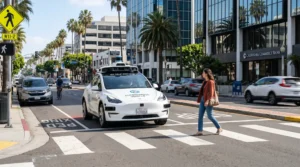
How Do Self-Driving Car Pedestrian Accidents Happen?
Although autonomous vehicles are designed to identify and avoid hazards, no technology is perfect. Several factors may contribute to collisions involving pedestrians.
A vehicle’s sensors may have difficulty detecting individuals in poor weather conditions, low lighting, or unusual roadway environments. Construction zones, temporary traffic controls, and unexpected pedestrian behavior may also create situations that challenge autonomous systems.
Software errors can sometimes lead to incorrect decisions. For example, a system may misclassify an object, fail to recognize a pedestrian crossing the street, or incorrectly predict the movement of people near the roadway.
Human involvement remains another factor. Many autonomous vehicles still require some level of driver supervision. If a human operator fails to intervene when necessary, that individual may share responsibility for the collision.
Who May Be Liable After a Self-Driving Car Accident?
One of the most challenging aspects of autonomous vehicle accidents is identifying who may be legally responsible.
Unlike conventional pedestrian accidents, liability may extend beyond the driver behind the wheel.
The Human Driver
In vehicles that require driver supervision, the operator may still have a duty to monitor roadway conditions and take control when necessary. If the driver ignores warnings or fails to react appropriately, they may share liability for the accident.
The Vehicle Manufacturer
Vehicle manufacturers may face scrutiny if a design defect contributed to the collision. This could involve faulty sensors, braking systems, cameras, or other components necessary for autonomous operation.
Software Developers
Autonomous driving software plays a critical role in vehicle decision-making. If a programming error causes the vehicle to behave unexpectedly or fail to identify pedestrians, software developers may become part of a liability investigation.
Vehicle Owners
In some situations, vehicle owners may be responsible for failing to maintain the vehicle properly or ignoring software updates and safety recalls.
Third Parties
Road design issues, defective traffic signals, construction companies, or other motorists may also contribute to pedestrian accidents involving autonomous vehicles.
Because each accident presents unique facts, multiple parties may be examined during an investigation.
How Is Fault Determined?
Determining fault after a self-driving car accident often requires extensive analysis and technical evidence.
Investigators may review: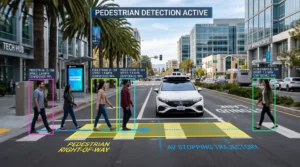
- Vehicle sensor data
- Event data recorder information
- Surveillance footage
- Dash camera recordings
- Software logs
- Witness statements
- Police reports
- Roadway conditions
- Vehicle maintenance records
Autonomous vehicles generate significant amounts of electronic data that may help reconstruct events leading up to a collision.
This information may reveal whether the vehicle detected the pedestrian, issued warnings, applied brakes, or experienced a system malfunction before impact.
California’s Role in Autonomous Vehicle Testing
California has become one of the nation’s leading testing grounds for autonomous vehicle technology. The California Department of Motor Vehicles regulates testing and deployment requirements for self-driving vehicles operating within the state.
Companies seeking to test autonomous vehicles must comply with various reporting and safety requirements established by regulators.
For more information regarding autonomous vehicle regulations, readers can review guidance provided by the California Department of Motor Vehicles:
As autonomous technology continues to evolve, state and federal regulations may also change to address emerging safety concerns and liability issues.
Common Injuries in Pedestrian Accidents Involving Self-Driving Cars
Pedestrians remain vulnerable regardless of whether a collision involves a human driver or an autonomous vehicle.
Common injuries may include:
Traumatic brain injuries often occur when a pedestrian strikes the vehicle or roadway during a collision. These injuries can range from mild concussions to severe neurological damage.
Broken bones are also frequently reported. Pedestrians may suffer fractures involving the legs, hips, arms, ribs, or pelvis depending on the force of impact.
Spinal cord injuries can result in long-term mobility limitations and extensive medical treatment.
Internal injuries may affect organs, blood vessels, and other critical systems within the body.
Some pedestrian accidents unfortunately result in fatal injuries, particularly when vehicles are traveling at higher speeds.
Can a Pedestrian Be Partially At Fault?
Yes. In some situations, a pedestrian’s actions may become part of the liability analysis.
For example, questions may arise if a pedestrian crossed outside a designated crosswalk, ignored traffic signals, entered traffic unexpectedly, or walked while distracted.
Many states apply comparative negligence principles that allow fault to be divided among multiple parties.
Even when a pedestrian shares some responsibility, other parties may still bear a percentage of fault depending on the circumstances of the accident.
What Evidence Is Important After a Self-Driving Car Accident?
Evidence preservation can play a significant role in understanding what happened.
Photographs of the accident scene may document vehicle damage, roadway conditions, traffic controls, and visibility factors.
Witness statements often provide valuable perspectives regarding vehicle movements and pedestrian actions before impact.
Police reports may contain observations, measurements, and preliminary findings collected at the scene.
Electronic vehicle data has become particularly important in autonomous vehicle cases because it may reveal how the vehicle’s systems responded before the collision occurred.
How Autonomous Vehicle Laws May Change
The legal framework surrounding self-driving cars continues to develop as technology advances.
Lawmakers, regulators, manufacturers, and safety advocates continue to debate questions involving software accountability, data privacy, safety standards, and insurance requirements.
Future regulations may create clearer guidelines regarding responsibility when autonomous systems contribute to pedestrian injuries.
As more self-driving vehicles enter public roadways, courts may also establish new legal precedents that influence how these cases are evaluated.
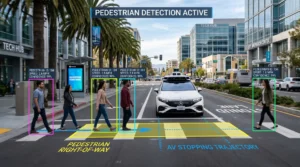
The Future of Pedestrian Safety and Autonomous Vehicles
Supporters of autonomous vehicle technology argue that self-driving systems may eventually reduce crashes caused by human error. Factors such as distracted driving, impaired driving, speeding, and fatigue contribute to many roadway collisions each year.
However, autonomous technology remains a developing field. Real-world testing continues to reveal challenges involving pedestrian recognition, complex traffic environments, and unexpected roadway situations.
Improving pedestrian safety may require a combination of technological innovation, infrastructure improvements, public education, and effective regulatory oversight.
Final Thoughts
When a self-driving car hits a pedestrian, determining responsibility can be significantly more complicated than a traditional traffic collision. Liability investigations may involve vehicle manufacturers, software developers, vehicle owners, safety operators, and other parties depending on the facts of the incident.
As autonomous vehicle technology becomes more common throughout the United States, understanding how these accidents occur and how liability may be assessed remains an important topic for pedestrians, drivers, regulators, and technology companies alike.