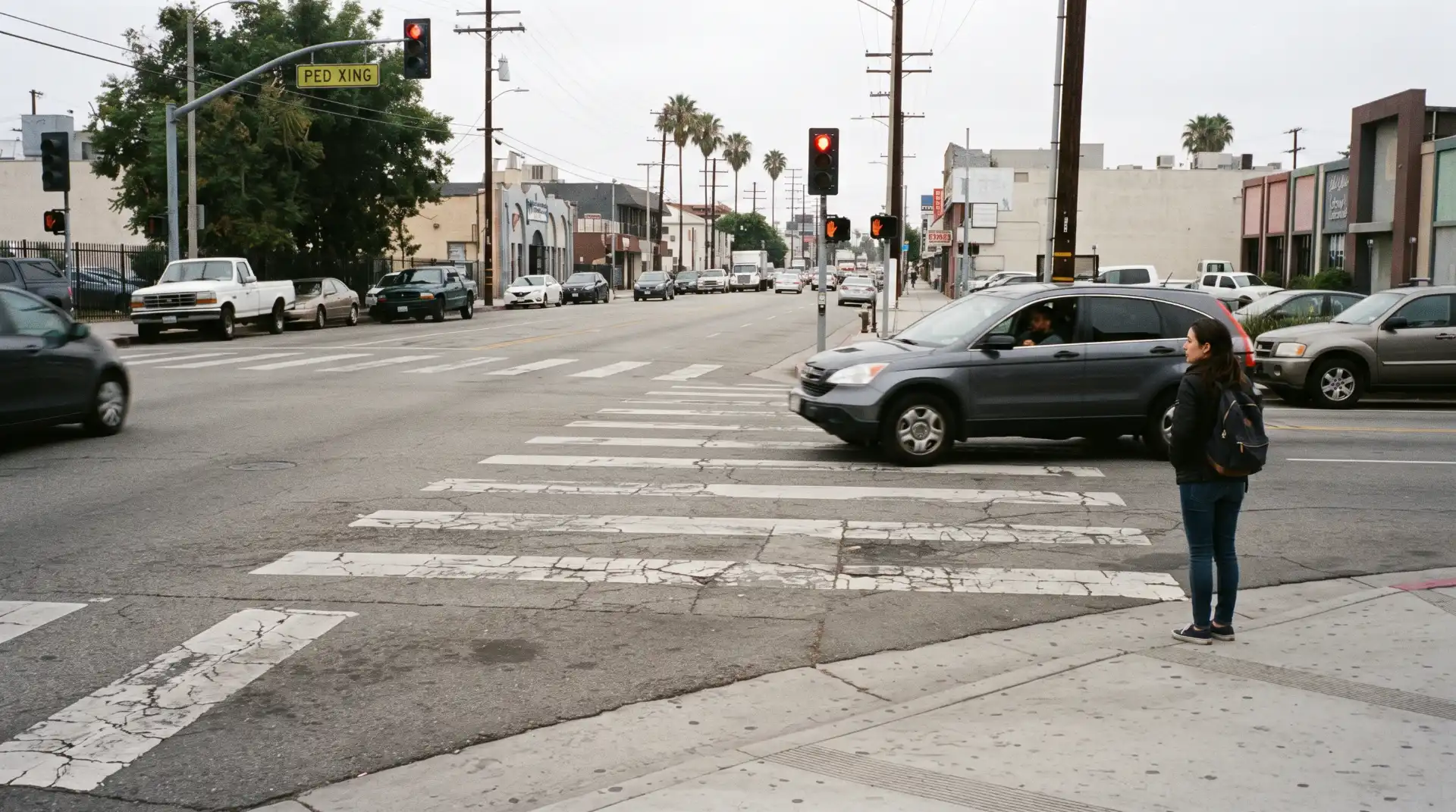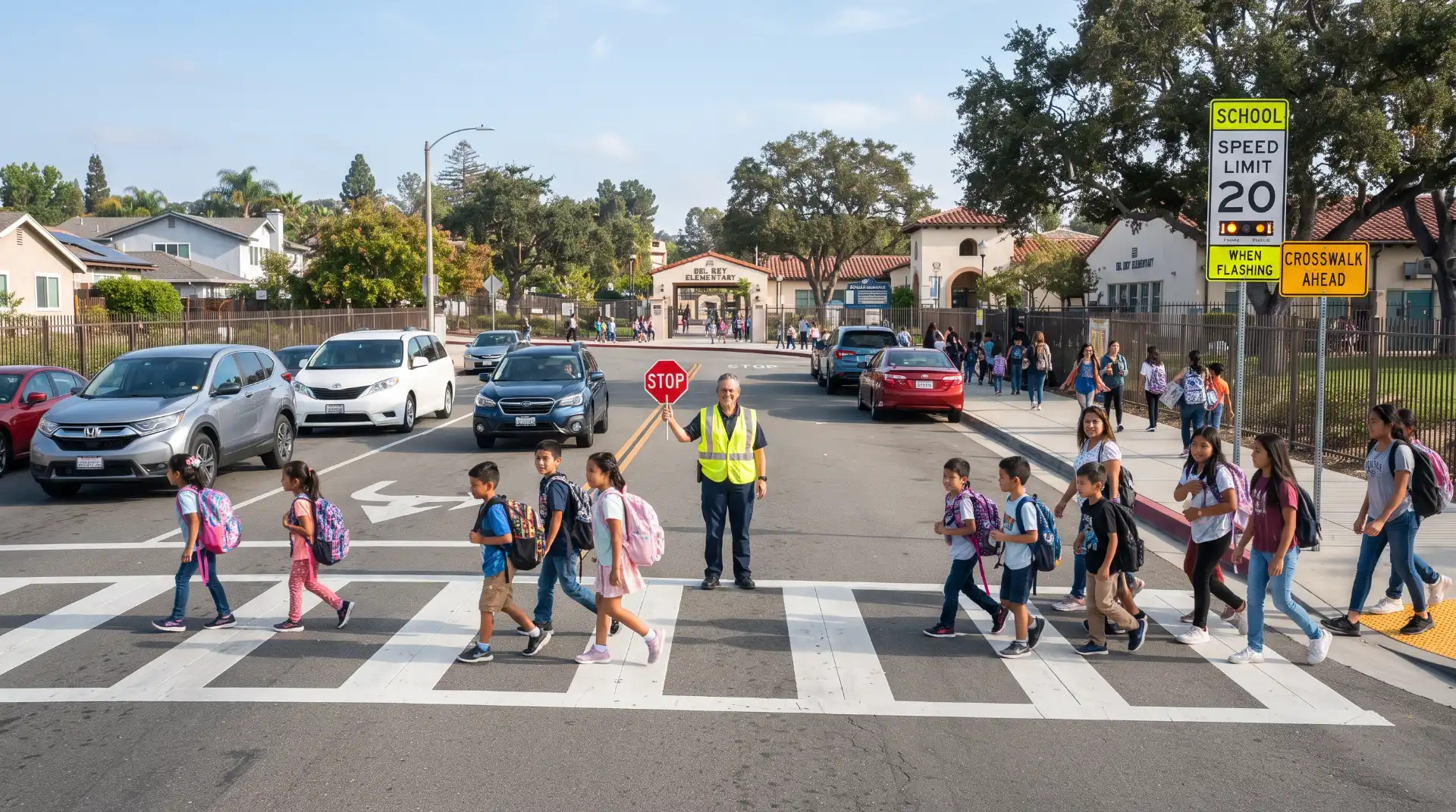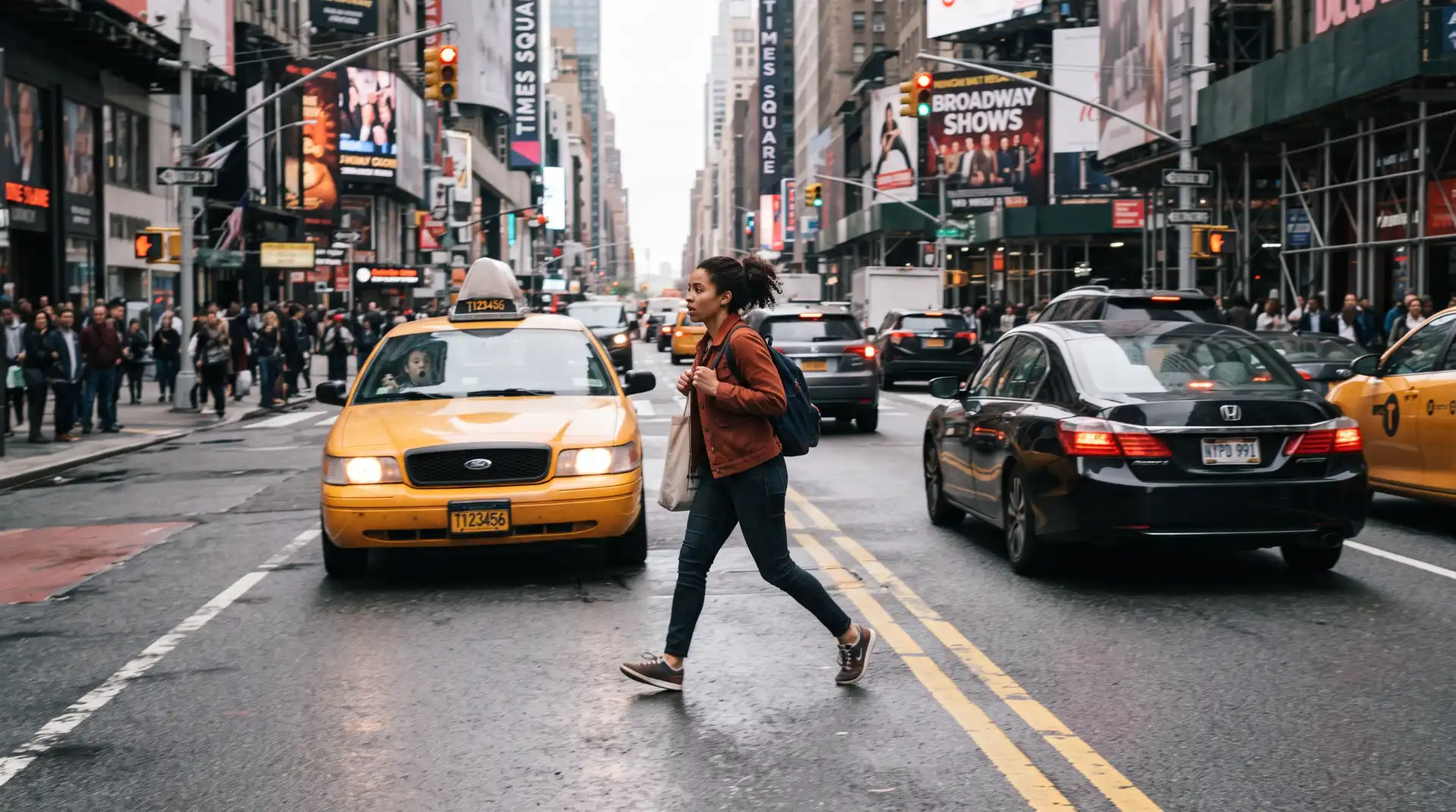
For decades, crossing the street outside of a designated crosswalk in California carried an immediate risk of receiving a costly traffic citation. Jaywalking was routinely enforced across municipalities from Los Angeles and San Diego to San Francisco and Sacramento, resulting in hundreds of dollars in fines for pedestrians who simply stepped across an empty residential street. However, legal reforms over recent years—most notably the implementation of Assembly Bill 2147, officially known as the Freedom to Walk Act—fundamentally transformed how California regulates street crossings.
As we navigate 2026, many pedestrians, motorists, and property owners remain confused about what these statutory changes actually mean when a collision occurs. Does the decriminalization of jaywalking mean pedestrians can step into oncoming traffic with total legal immunity? If a driver strikes a pedestrian who crossed mid-block, is the driver automatically free from civil financial liability?
The short answer is no. While the law altered criminal citation standards for police stops, civil liability for personal injury damages continues to operate under California’s longstanding system of pure comparative negligence. Understanding the subtle distinction between decriminalized jaywalking and civil fault allocation is vital for injured pedestrians, motorists, insurance adjusters, and personal injury attorneys alike.
The Legal Transformation: Assembly Bill 2147 and the Freedom to Walk Act
To grasp pedestrian accident liability today, one must first examine the legislative intent and statutory language of AB 2147. Signed into law to prevent disproportionate law enforcement stops and reduce unnecessary financial penalties on pedestrians, AB 2147 modified how California Vehicle Code Section 21955 and related statutes are enforced.
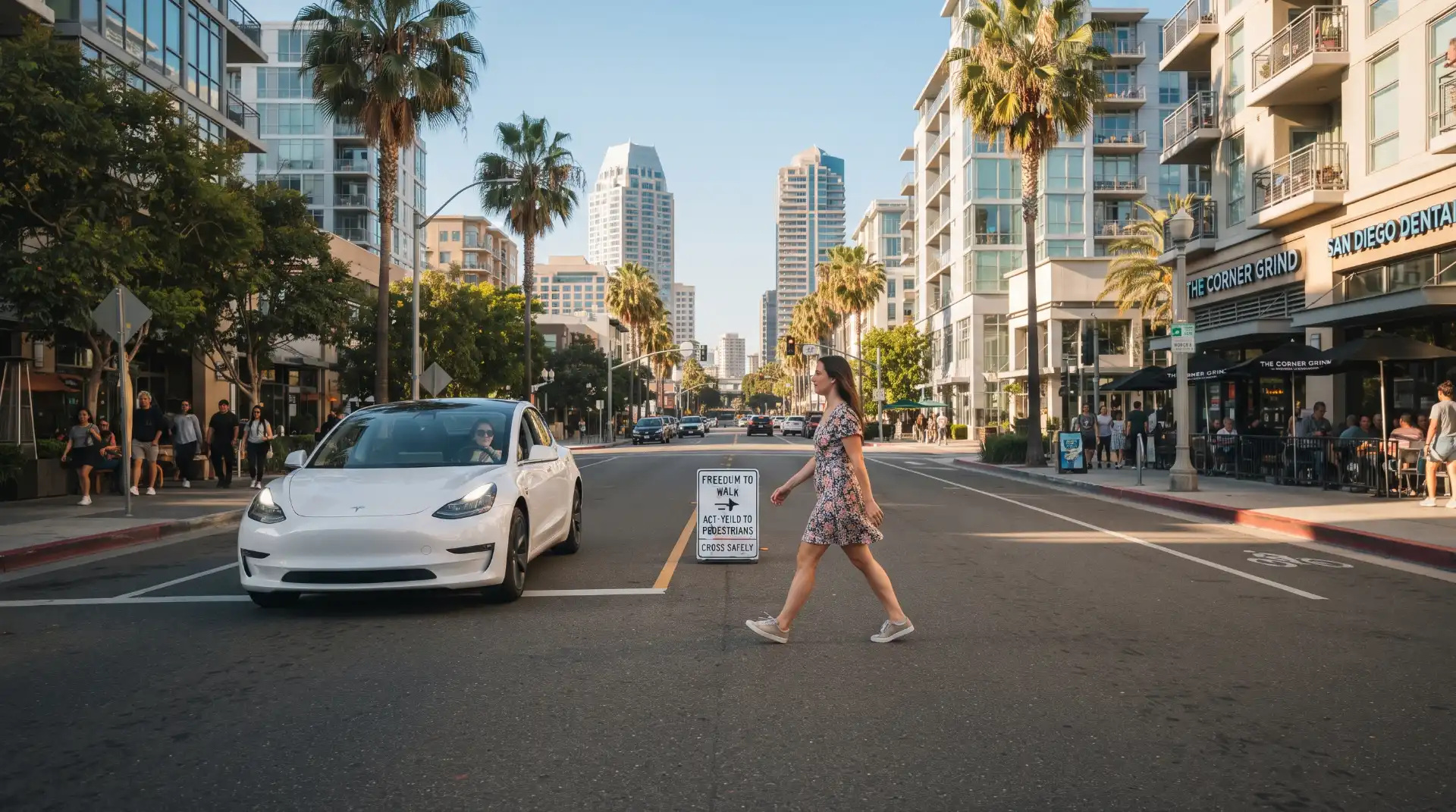
Under prior California law, stepping across a street between adjacent signalized intersections anywhere other than a marked or unmarked crosswalk constituted an automatic infraction subject to steep fines and administrative assessments. Under current 2026 standards, law enforcement officers are expressly prohibited from stopping or citing a pedestrian for crossing outside a crosswalk unless a reasonably careful person would realize there is an immediate danger of collision with a moving vehicle.
This legislative shift effectively decriminalized peaceful, safe mid-block street crossings when no oncoming traffic poses an immediate hazard. If a pedestrian looks both ways on a quiet suburban street, sees no cars within range, and walks directly to the opposite sidewalk, no traffic law has been violated.
However, the Freedom to Walk Act did not grant pedestrians carte blanche. It explicitly retained provisions emphasizing that pedestrians still hold a duty of reasonable care for their own safety. Stepping off a curb directly into the path of an oncoming vehicle that has no time to stop remains both illegal under California Vehicle Code § 21950(b) and citable as a traffic infraction due to the presence of immediate danger.
Core Principles of California Pedestrian Laws in 2026
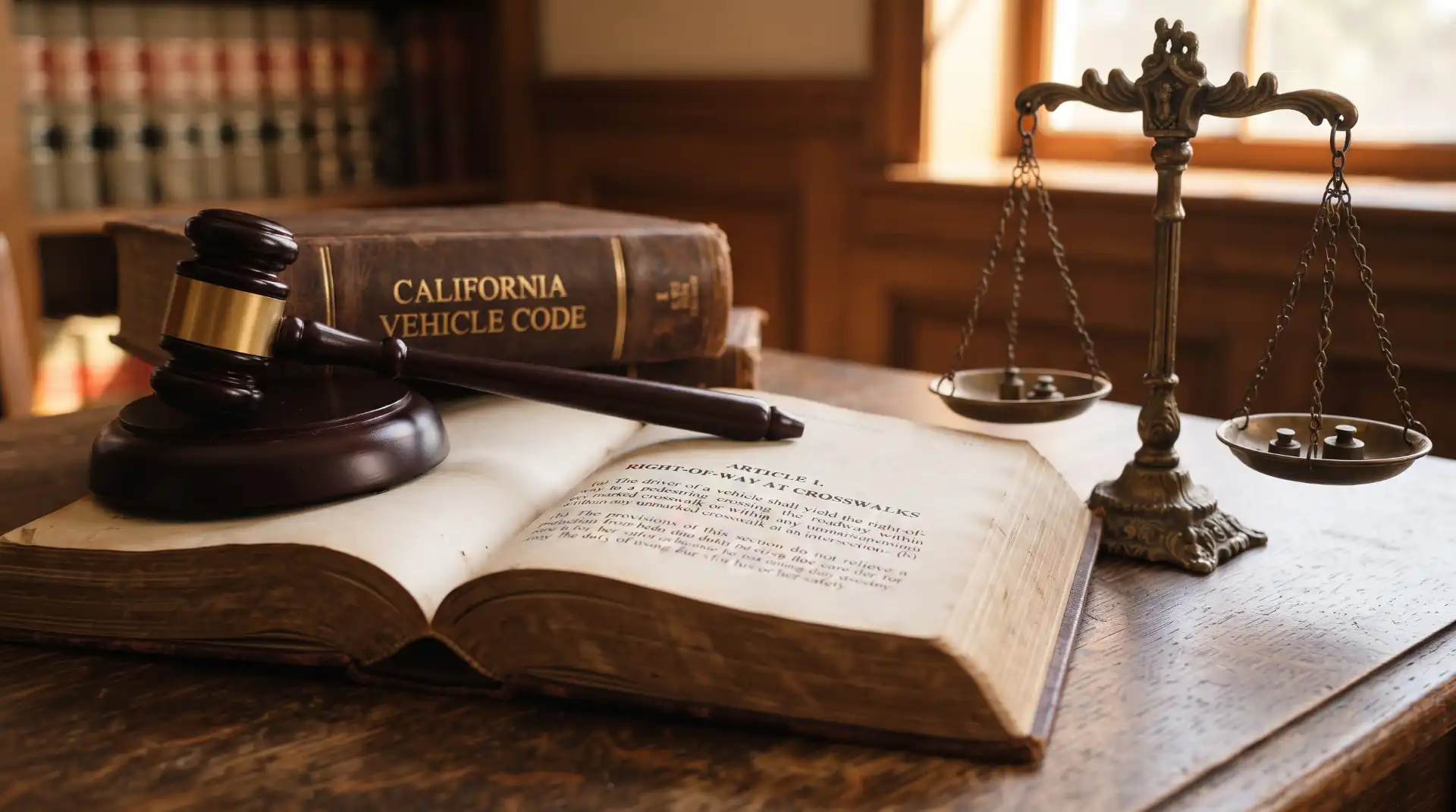
California’s legal framework governing pedestrian interactions with motor vehicles relies on several interconnected statutes within the California Vehicle Code. These statutory duties form the baseline against which judges, juries, and insurance adjusters evaluate negligence after a street accident.
Duty of Care at Marked and Unmarked Crosswalks (CVC § 21950)
California law provides that drivers must yield the right-of-way to a pedestrian crossing the roadway within any marked crosswalk or within any unmarked crosswalk at an intersection. An unmarked crosswalk exists at virtually every standard four-way or three-way intersection where sidewalks terminate at the curb, even if no white lines are painted on the asphalt. Drivers approaching crosswalks must reduce speed and exercise reasonable caution to safeguard pedestrians. Furthermore, under CVC § 21951, when a vehicle has stopped at a marked or unmarked crosswalk to permit a pedestrian to cross, the driver of any other vehicle approaching from the rear shall not overtake and pass the stopped vehicle.
Pedestrian Duties and Sudden Hazards (CVC § 21950(b))
The statutory right-of-way granted to pedestrians in crosswalks is not absolute. CVC § 21950(b) prohibits pedestrians from suddenly leaving a curb or place of safety and walking or running into the path of a vehicle that is so close that it constitutes an immediate hazard. Furthermore, pedestrians may not unnecessarily stop or delay traffic while in a marked or unmarked pedestrian zone.
Pedestrians Crossing Outside Crosswalks (CVC § 21954)
Every pedestrian crossing a roadway at any point other than within a marked crosswalk or within an unmarked crosswalk at an intersection must yield the right-of-way to all vehicles upon the roadway that are close enough to constitute an immediate hazard. However, CVC § 21954(b) explicitly notes that this requirement does not relieve a driver of the duty to exercise due care for the safety of any pedestrian upon a roadway. This statutory counterweight is crucial because it establishes that a driver cannot simply run down a pedestrian crossing outside a crosswalk merely because the driver held the technical right-of-way.
How Pure Comparative Negligence Works in Pedestrian Accident Claims
The single biggest misconception among the public—and frequently touted by insurance companies looking to deny claims—is that jaywalking automatically destroys a pedestrian’s right to financial compensation if they are hit by a car. In California civil tort law, this belief is entirely false.
California operates under a system of pure comparative fault, established in the landmark California Supreme Court decision Li v. Yellow Cab Co. in 1975 and codified under California Civil Code § 1714. Unlike modified comparative fault jurisdictions that bar an injured plaintiff from collecting any money if they are 50% or 51% at fault, California permits an injured party to recover compensation regardless of their percentage of fault, even if they are 90% or 99% responsible for the incident. The total monetary award is simply reduced by the plaintiff’s percentage of negligence.
When an injured pedestrian files a personal injury lawsuit or insurance claim, the factfinder (a jury, judge, or insurance settlement adjuster) evaluates the behavior of both parties to assign a percentage of fault totaling 100%.
For instance, if a jaywalking pedestrian suffers $500,000 in total damages—comprising medical bills, emergency surgery, lost wages, and pain and suffering—and a jury determines the pedestrian was 30% responsible for crossing mid-block without looking while the speeding driver was 70% responsible for failing to keep a proper lookout, the pedestrian receives 70% of their total damages, amounting to $350,000. Even in a scenario where a pedestrian is deemed 80% at fault for stepping out on a dark night, if the driver was 20% at fault for driving with a broken headlight or traveling over the speed limit, the pedestrian can still recover 20% of their total proven damages.
Key Drivers of Fault in California Pedestrian Collisions
Because fault is divided proportionately, civil cases focus on establishing specific acts of negligence committed by both the driver and the pedestrian.
Driver Factors Contributing to Liability
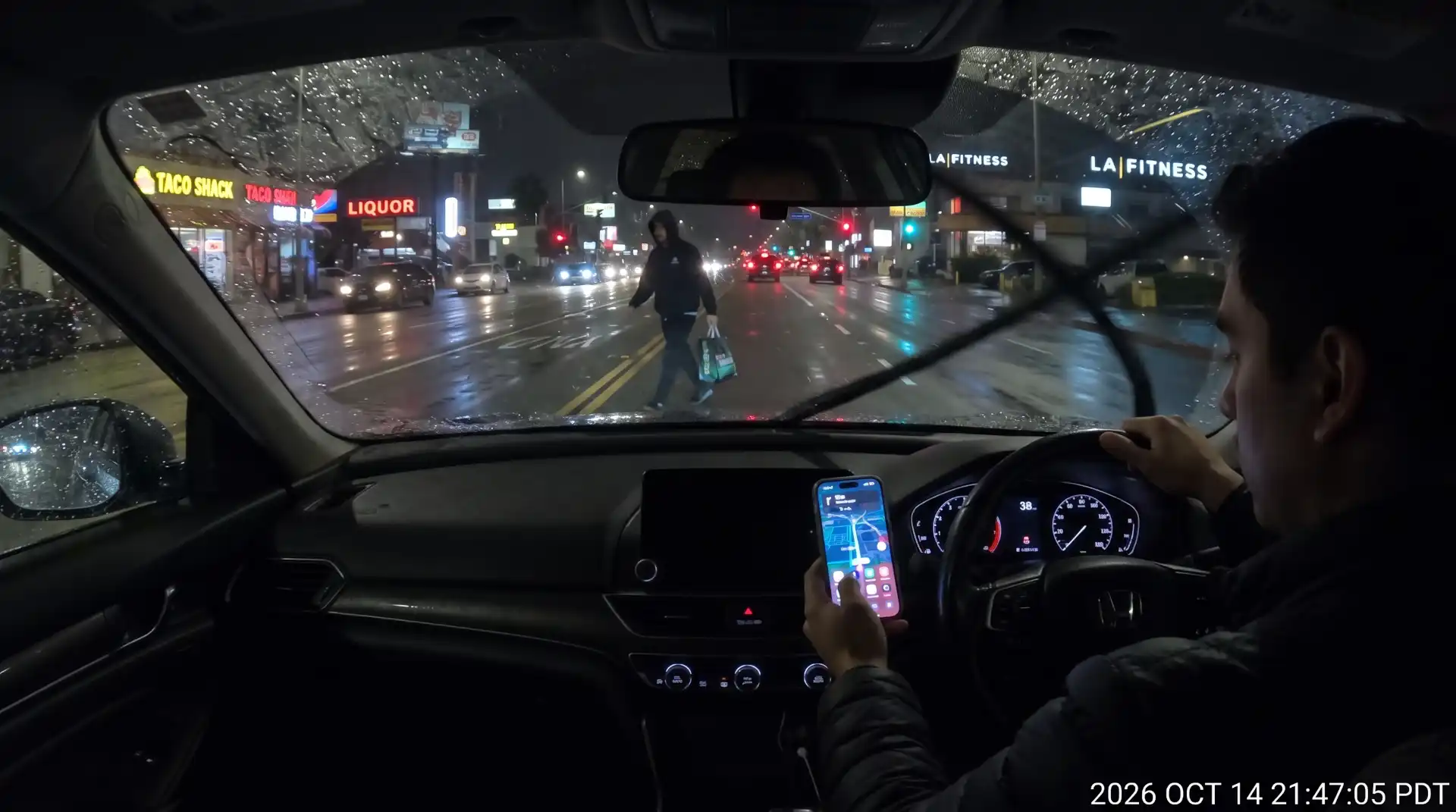
Drivers carry an inherent responsibility when operating a multi-ton vehicle on public roads. Even when a pedestrian crosses outside a crosswalk, drivers are regularly found partially or primarily at fault due to specific negligent behaviors. Distracted driving, such as texting, checking social media, or manipulating navigation screens, prevents drivers from noticing pedestrians stepping into the street in time to brake safely. Driving at speeds excessive for roadway conditions significantly increases stopping distances and collision severity. Additionally, driving under the influence of drugs or alcohol degrades reaction times and spatial awareness, while swerving around a vehicle that has stopped for a pedestrian violates explicit statutory prohibitions under CVC § 21951. Failing to yield when making right turns on red or left turns through signalized intersections also accounts for a massive percentage of severe pedestrian injuries across California urban centers.
Pedestrian Factors Contributing to Liability
Conversely, defense attorneys and insurance carriers look for evidence that the pedestrian acted unreasonably under the circumstances. Darting out unexpectedly from between parked vehicles gives approaching drivers zero reaction time, making the pedestrian heavily at fault under CVC § 21950(b). Crossing poorly lit streets at night wearing dark clothing without checking for headlights significantly increases pedestrian fault percentages. Finally, walking while distracted by a smartphone or navigating streets while heavily intoxicated compromises self-care and increases vulnerability.
Deep-Dive Case Scenarios: Analyzing Liability Post-AB 2147
To see how California courts and insurance adjusters apply these principles in 2026, consider five detailed, practical legal scenarios representing common urban and suburban accidents.
Scenario A: The Daytime Suburban Mid-Block Crossing
A pedestrian crosses a clear, two-lane residential street mid-block during midday. No vehicles are approaching when the pedestrian enters the roadway. A driver turning onto the street while looking down at a mobile device accelerates and strikes the pedestrian midway across the street. Under AB 2147, the pedestrian committed no crime or infraction because crossing mid-block without oncoming traffic posed no immediate danger. In civil litigation, the driver breached the fundamental duty of care to maintain a lookout. The driver will likely be found 90% to 100% liable for the pedestrian’s injuries, while the pedestrian carries minimal to zero fault.
Scenario B: The Nighttime Urban Arterial Crossing
At 10:00 PM, a pedestrian wearing dark clothing crosses a six-lane boulevard 100 feet away from a signalized intersection with a marked crosswalk. A driver traveling 5 mph over the speed limit in the center lane strikes the pedestrian. Here, both parties exhibited conduct contributing to the crash. The pedestrian chose to cross a high-speed arterial at night without using the nearby signalized crosswalk and while wearing dark clothing. However, the driver was speeding and failed to adjust speed for nighttime visibility. A jury might determine the pedestrian was 40% at fault for failing to yield under CVC § 21954, while the driver was 60% at fault for excessive speed and failing to observe the roadway ahead. The pedestrian recovers 60% of calculated damages.
Scenario C: Darting From Between Parked Cars
A pedestrian runs out from behind a large delivery truck into active urban traffic without stopping to check for oncoming vehicles. A driver traveling within the speed limit slams on the brakes immediately upon seeing the pedestrian but cannot stop in time. The pedestrian created an immediate hazard under CVC § 21950(b) and failed to yield under CVC § 21954. The driver acted as a reasonably prudent person, maintaining lawful speed and reacting promptly. In this case, the pedestrian would likely bear 85% to 100% of the fault, resulting in little to no financial recovery.
Scenario D: The “Right Turn on Red” Blindspot
A pedestrian begins crossing an intersection within a marked crosswalk with a green “Walk” signal. A motorist coming to a rolling stop at the red light looks only to their left for oncoming car traffic, executes a right turn on red, and knocks down the pedestrian. Despite the driver arguing that the pedestrian should have watched out for turning vehicles, CVC § 21950 gives the pedestrian absolute right-of-way under a valid walk signal. The driver carries 100% liability for failing to yield.
Scenario E: The Dual-Distraction Distracted-Walker Collision
A pedestrian wearing noise-canceling headphones and staring down at a mobile phone steps off the curb at a mid-block location without glancing up. Simultaneously, an approaching driver is eating food while driving 10 mph over the posted speed limit. The driver sees the pedestrian from 50 feet away but fails to brake immediately because their hands are occupied. Both parties acted negligently. The jury may assign 50% fault to the pedestrian for total lack of situational awareness and 50% fault to the speeding, distracted driver for failing to take preventative stopping action.
Economic vs. Non-Economic Damages in California Pedestrian Claims
Understanding how comparative negligence affects financial recovery requires breaking down the two primary categories of personal injury damages recognized in California civil litigation.
1. Economic Damages (Objective Financial Losses)
Economic damages represent direct, quantifiable monetary losses caused by the collision. These are backed by tangible documentation such as medical bills, receipts, pay stubs, and tax returns. They include:
-
Immediate emergency room care, trauma surgery, and hospital stays.
-
Long-term physical therapy, rehabilitation, and durable medical equipment.
-
Past lost income and future loss of earning capacity caused by temporary or permanent disability.
-
Out-of-pocket expenses such as home modification, transportation to medical appointments, and in-home caregiving services.
Under California law, economic damages are subject to comparative fault reduction. If your economic losses equal $200,000 and you are found 25% at fault, your economic recovery is $150,000. Joint and several liability rules apply to economic damages, meaning multiple at-fault defendants can be held collectively responsible for paying the full reduced amount.
2. Non-Economic Damages (Subjective Quality-of-Life Losses)
Non-economic damages compensate the injured victim for non-monetary, human impacts of an accident. These include:
-
Physical pain, discomfort, and chronic suffering.
-
Emotional distress, anxiety, depression, and post-traumatic stress disorder (PTSD) stemming from the collision.
-
Loss of enjoyment of life, loss of companionship, and scarring or disfigurement.
Under California Civil Code § 1431.2 (commonly known as Proposition 51), non-economic damages are strictly several, not joint. Each defendant is liable only for the portion of non-economic damages directly proportional to their percentage of fault. If a jury awards $400,000 in non-economic damages and finds a defendant driver 60% responsible, that driver can never be forced to pay more than $240,000 of the non-economic award, regardless of whether other entities (such as a municipality with poor street lighting) can pay their share.
Essential Evidence in California Pedestrian Accident Claims
Because fault allocation directly determines the settlement value of a personal injury claim, gathering objective evidence immediately after an accident is critical.
Critical Evidence Types for Establishing Liability
Official Traffic Collision Reports prepared by responding law enforcement officers provide baseline documentation, including crash diagrams, weather observations, witness contacts, and initial officer impressions. While police determinations of fault are generally inadmissible as hearsay in civil trials, insurance adjusters rely heavily on them during pre-suit negotiations.
Surveillance footage from nearby security systems, ring doorbells, municipal traffic management cameras, and commercial vehicle dashcams offers objective proof regarding pedestrian travel speed, vehicle braking, signal status, and ambient lighting.
Modern vehicles carry Event Data Recorders (EDRs) that preserve critical technical telematics—such as pre-impact speed, throttle application, steering inputs, and braking history—seconds before impact.
In complex or contested claims, accident reconstruction experts evaluate physical roadway markings, vehicle crush damage, debris fields, and throw dynamics to mathematically re-create the collision sequence and establish exact reaction windows.
Medical records documenting the physical angle of impact, bone fracture patterns, and soft-tissue injury locations can also help medical experts reconstruct how the pedestrian was struck relative to the vehicle’s bumper and hood.
Steps to Take Following a Pedestrian Accident in California
If you or a loved one is involved in a pedestrian accident anywhere in California, taking deliberate steps immediately following the incident protects both health and legal rights.
-
Prioritize Immediate Emergency Medical Care: Call 911 immediately. Physical health is the top priority, and internal trauma or head injuries may not present symptoms right away. Immediate medical evaluations establish formal diagnostic records connecting the collision directly to sustained injuries.
-
Request Official Law Enforcement Response: Ensure local police or the California Highway Patrol (CHP) respond to document the incident and file an official collision report.
-
Capture Detailed Scene Evidence: When physically possible, photograph and video vehicle positions, tire skid marks, road surface conditions, traffic control signals, street lighting, and visible physical injuries.
-
Collect Eye Witness Information: Gather full names, phone numbers, and email addresses from bystanders, shopkeepers, or other drivers who saw the collision occur.
-
Refrain From Statements Regarding Fault: Avoid apologizing or making casual statements such as “I wasn’t looking” or “I shouldn’t have stepped out.” Insurance adjusters routinely exploit casual comments to assign unfair levels of comparative negligence.
-
Retain Legal Representation Experienced in California Tort Law: Consult qualified personal injury attorneys specializing in California pedestrian law to protect your rights and challenge aggressive insurance defense tactics.
Navigating Insurance Negotiations and Legal Action
Dealing with auto insurance adjusters requires caution. Insurance companies operate to minimize payouts, and their most common strategy in pedestrian cases is aggressively asserting that the pedestrian was jaywalking and therefore entirely or largely responsible for the accident.
Knowing California’s pure comparative fault doctrine empowers victims to push back against outright insurance denials. Even if an adjuster claims you were 40% at fault for crossing outside a crosswalk, you retain the legal right under California law to pursue compensation for the remaining 60% of your financial and emotional losses.
Under California Code of Civil Procedure § 335.1, the general statute of limitations for filing a personal injury lawsuit arising from a pedestrian accident is two years from the date of the injury. If the collision involves a public or government entity—such as a city bus, state vehicle, or a claim involving poorly designed municipal roadway infrastructure—a formal administrative claim must be filed within six months under the California Government Claims Act before a lawsuit can be initiated.
Summary of Pedestrian Safety and Rights in California
The Freedom to Walk Act (AB 2147) modernized California’s approach to street crossings by decriminalizing safe mid-block crossings and eliminating arbitrary jaywalking tickets. However, it did not eliminate basic rules of safety or absolve pedestrians and drivers of their mutual duty to exercise due care on public roadways.
If a collision occurs, California’s pure comparative fault system ensures that liability is shared fairly based on the evidence. By understanding statutory rights, gathering strong evidence, and recognizing how negligence is calculated under state law, injured pedestrians can effectively counter insurance company tactics and secure the compensation they deserve.